Blog / 2025 Subaru Ascent

Why the Subaru Ascent is Perfect for Family Road Trips

Why the Subaru Ascent is Perfect for Family Road Trips

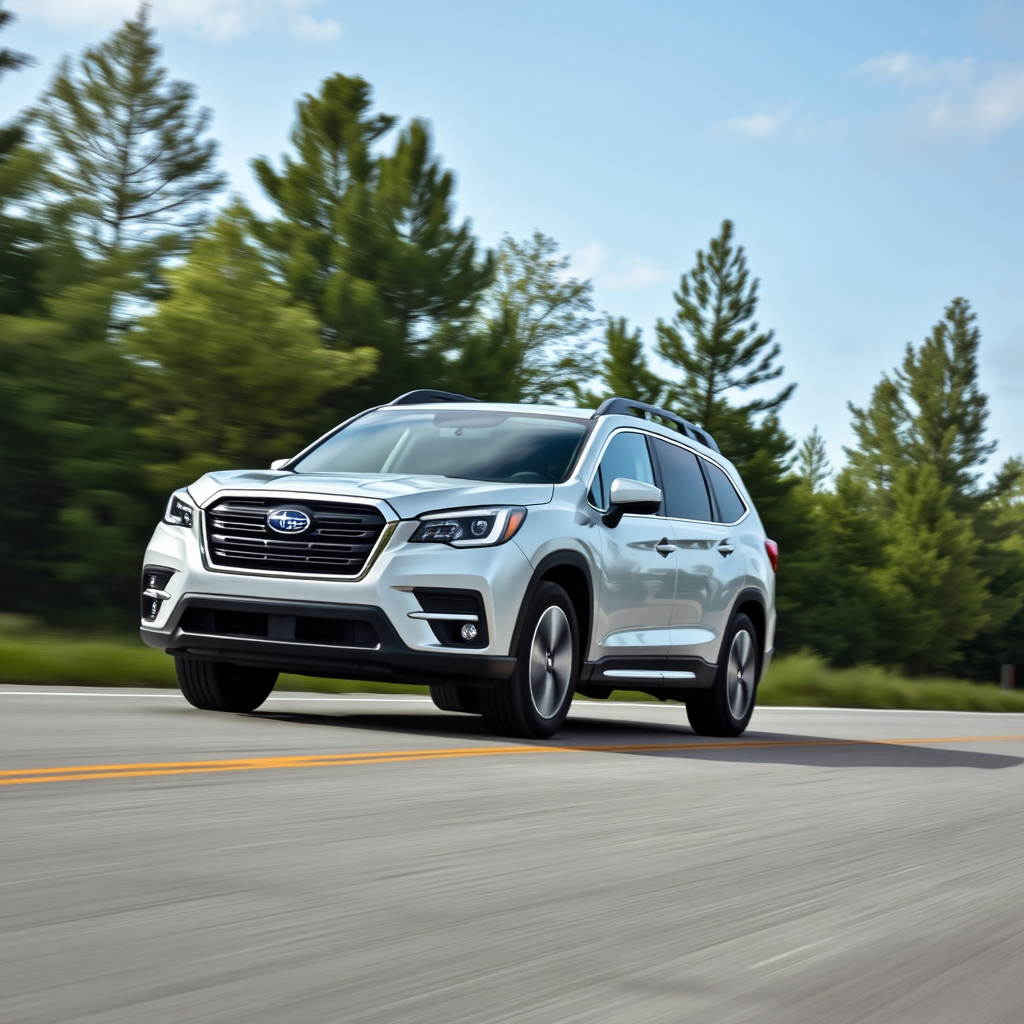
Planning a family road trip can be both exciting and challenging. Finding the right vehicle to accommodate your family’s needs is crucial for a successful journey. The Subaru Ascent, with its spacious design, advanced safety features, and modern technology, is the perfect companion for family road trips. Here’s why:

1. Spacious Interior and Comfort The Subaru Ascent offers three rows of seating, comfortably accommodating up to eight passengers. Its flexible seating configurations and ample legroom ensure that everyone, from kids to adults, can stretch out and relax. With up to 75.6 cubic feet of cargo space, there’s plenty of room for luggage, sports gear, and all the essentials needed for a family adventure.

2. Advanced Safety Features Safety is a top priority for families, and the Ascent delivers with Subaru’s EyeSight® Driver Assist Technology. This suite of safety features includes adaptive cruise control, lane departure warning, and pre-collision braking, providing peace of mind on long drives. Additionally, the available 360-degree Surround View Monitor enhances visibility, making parking and maneuvering easier.

3. Entertainment and Connectivity Keeping everyone entertained on the road is effortless with the Ascent’s SUBARU STARLINK® Multimedia system. Featuring an 11.6-inch touchscreen, wireless Apple CarPlay® and Android Autoâ„¢ integration, and available Wi-Fi connectivity, passengers can enjoy their favorite music, apps, and streaming services throughout the journey.

4. All-Wheel Drive Capability Whether you’re navigating through city streets or exploring off-the-beaten-path destinations, the Ascent’s standard Symmetrical All-Wheel Drive provides exceptional stability and control. With 8.7 inches of ground clearance and available X-MODE® with Hill Descent Control, you can confidently tackle various terrains and weather conditions.

5. Fuel Efficiency and Towing Capacity The Ascent’s efficient engine ensures you spend less time at the pump and more time enjoying the open road. Plus, with a towing capacity of up to 5,000 pounds, you can bring along bikes, a small trailer, or other recreational equipment to enhance your family’s adventure.

6. Family-Friendly Features Thoughtful details like USB ports throughout the cabin, rear-seat climate controls, and available heated seats ensure that every family member stays comfortable and connected. The Ascent’s quiet cabin design also minimizes road noise, allowing for peaceful conversations and restful naps.

In conclusion, the Subaru Ascent is designed with families in mind, offering the perfect blend of space, safety, and technology for memorable road trips. Visit Jim Keras Subaru to explore the Ascent and see how it can elevate your family’s travel experience.

Posted in:

Related Posts

Subaru Ascent vs. Honda Pilot: A Comprehensive Comparison for Memphis Drivers

Subaru Ascent vs. Honda Pilot: A Comprehensive Comparison for Memphis Drivers Finding the perfect SUV for your family can be a daunting task, especially when considering popular models like the Subaru Ascent and the Honda Pilot. Both vehicles offer a range of features that appeal to families in Memphis, TN, and surrounding areas such as Germantown, TN, and Southaven, MS. This article delves into the specifications, features, and overall performance of the Subaru Ascent, comparing it to the Honda Pilot to help you make an informed decision. Introduction to Subaru Ascent and Honda Pilot Understand the significance of the Subaru Ascent and Honda Pilot in the SUV market, focusing on their popularity in Memphis and nearby regions. Performance and Engine Specifications Explore the engine capabilities and performance metrics of both SUVs, highlighting the Ascent's turbocharged engine and its advantages. Interior and Comfort Compare the interior features, space, and comfort levels offered by the Subaru Ascent and Honda Pilot, with a focus on family-friendly amenities. Safety and Reliability Delve into the safety features and reliability ratings of both vehicles, emphasizing Subaru's commitment to safety. Technology and Infotainment Examine the technological advancements and infotainment systems in the Ascent and Pilot, noting the user experience and connectivity options. Fuel Efficiency and Environmental Impact Discuss the fuel economy of each SUV and their environmental considerations, highlighting the efficiency of the Subaru Ascent. Final Thoughts: Choosing the Right SUV for You Summarize the key points and offer guidance on selecting the best SUV based on your needs and preferences. Introduction to Subaru Ascent and Honda Pilot The Subaru Ascent and Honda Pilot are two formidable contenders in the midsize SUV market. Designed with families in mind, these vehicles provide ample space, advanced safety features, and modern technology, appealing to drivers in Memphis, TN, and nearby areas. The Subaru Ascent, with its standard all-wheel drive and robust turbocharged engine, is particularly popular among those who value performance and safety. As you weigh your options, consider the unique features and benefits each SUV offers, and how they align with your lifestyle and driving needs. Performance and Engine Specifications When it comes to performance, the Subaru Ascent stands out with its 260-horsepower turbocharged four-cylinder engine. This engine delivers ample power for daily driving, providing a smooth and responsive experience on the roads of Memphis, TN. The Ascent's engine is paired with a continuously variable transmission (CVT), which enhances fuel efficiency and ensures a seamless driving experience. The Honda Pilot, on the other hand, features a 280-horsepower V6 engine, offering a slightly more robust power output. However, the Ascent's turbocharged engine provides a more efficient and economical option, particularly for those who frequently drive in urban areas like Germantown, TN, and Horn Lake, MS. The Ascent's all-wheel drive system also provides superior traction and stability, making it an excellent choice for navigating the varied terrains of the Southaven, MS, region. Interior and Comfort Both the Subaru Ascent and Honda Pilot offer spacious interiors designed to accommodate families and their gear. The Ascent's cabin is known for its quietness and comfort, featuring roomy second-row captain's chairs and a usable third row, ideal for shorter trips around Olive Branch, MS. The straightforward controls and premium materials in the Ascent enhance the overall driving experience, ensuring comfort for both the driver and passengers. The Honda Pilot also offers a spacious interior with comfortable seating for up to eight passengers, making it a practical choice for larger families in Moscow, TN, and Holly Springs, MS. However, the Ascent's interior is often praised for its durability and high-quality finishes, particularly in the upper trims, providing a more luxurious feel for drivers in Byhalia, MS. Safety and Reliability Safety is a top priority for both Subaru and Honda, and the Ascent and Pilot are equipped with a range of advanced safety features. The Subaru Ascent boasts standard features such as adaptive cruise control, blind-spot monitoring, and automatic emergency braking, making it a reliable choice for families in Memphis, TN, and beyond. The Ascent's strong safety ratings and Subaru's reputation for reliability provide peace of mind to drivers in Germantown, TN, and Collierville, TN. The Honda Pilot also offers a comprehensive suite of safety features, including adaptive cruise control and lane-keeping assist. However, the Ascent's standard all-wheel drive and superior safety ratings give it an edge for those prioritizing safety and reliability in Southaven, MS, and Olive Branch, MS. Technology and Infotainment In terms of technology, the Subaru Ascent is equipped with an array of advanced features designed to enhance the driving experience. It includes a user-friendly infotainment system with an 11.6-inch touchscreen, wireless Apple CarPlay, and Android Auto, providing seamless connectivity for drivers in Oakland, TN, and Rossville, TN. The Ascent also offers a Wi-Fi hotspot and multiple USB ports, ensuring passengers remain connected and entertained on long trips. The Honda Pilot features a comparable infotainment system with a slightly larger touchscreen, but it lacks some of the intuitive features found in the Ascent. For tech-savvy drivers in Tupelo, MS, and Oxford, MS, the Ascent's modern technology and ease of use make it a more appealing option. Fuel Efficiency and Environmental Impact Fuel efficiency is an important consideration for many drivers, and the Subaru Ascent delivers competitive fuel economy with its turbocharged engine. It achieves an estimated 22 mpg overall, making it an efficient choice for daily commutes and long road trips in Memphis, TN, and surrounding areas. The Ascent's eco-friendly design and Subaru's commitment to sustainability also appeal to environmentally conscious drivers in Germantown, TN, and Horn Lake, MS. The Honda Pilot offers similar fuel efficiency, but the Ascent's turbocharged engine provides a slight advantage in terms of overall efficiency. This makes the Ascent a more economical choice for families in Southaven, MS, and Olive Branch, MS, who prioritize fuel savings and environmental impact. Final Thoughts: Choosing the Right SUV for You When choosing between the Subaru Ascent and Honda Pilot, consider your specific needs and preferences. The Ascent's combination of performance, safety, and technology makes it an excellent choice for families in Memphis, TN, and beyond. Its superior all-wheel drive capabilities and advanced safety features provide peace of mind, while its spacious and comfortable interior ensures a pleasant driving experience. For those interested in exploring the Subaru Ascent further, visit Jim Keras Subaru to view our New Subaru Inventory or Used Vehicle Inventory. If you're considering trading in your current vehicle, use our Get your trade value tool to find out its worth. For those in need of maintenance or repairs, our Schedule Service and Diagnostics page offers convenient scheduling options. For more information, visit us at 2110 Covington Pike Memphis, TN 38128 or call us at (901) 313-6120

How Long Does It Take to Charge a Subaru Solterra with a Level 2 Home Charger?

A Subaru Solterra plugged into a 240-volt Level 2 home charging station replenishes an empty battery in roughly 8 to 11 hours, depending on model year and circuit amperage. Equipped with an upgraded 11-kW onboard charger, the latest Solterra models complete a full charge from zero in about 8 hours on a dedicated 48-amp supply. Most residential 32-amp or 40-amp setups add approximately 20 to 25 miles of driving range per hour of charging. Overnight home charging provides a full battery recharge while you sleep. Drivers returning home in the evening with 20 percent battery remaining can plug in and greet a fully charged vehicle before the morning commute begins. Because standard residential electricity flows continuously through a dedicated 240-volt wall box, charging efficiency remains high even during seasonal temperature drops. Our sales team frequently walks electric crossover shoppers through the practical side of home ownership. Electric vehicle buyers often want to know whether day-to-day driving requires frequent public station stops. With a Level 2 unit wired in your garage or carport, routine charging takes less than 10 seconds of physical effort: plug in when parking, and unplug before pulling out. You avoid public charging lines and enjoy predictable charging speeds. To explore electric crossover capability in person, start by finding our showroom or speaking directly with our sales specialists at (901) 373-2700. Table of Contents How Long Does It Take to Charge on a Standard 120V Household Outlet? Do Solterra Owners Need a Level 2 Charger, and What Electrical Upgrades Are Required? Subaru Solterra vs. Toyota bZ4X: Home Charging Speeds and Electric SUV Value Solterra Home Electricity Costs vs. Fueling a Gas-Powered Subaru Forester Common Questions About Charging the Subaru Solterra at Home Experience Solterra Electric Performance at Jim Keras Subaru How Long Does It Take to Charge on a Standard 120V Household Outlet? Charging a Subaru Solterra on a standard 120-volt household three-prong outlet takes roughly 50 to 70 hours to go from completely empty to 100 percent. Known as Level 1 charging, this method restores roughly 2 to 4 miles of range per hour of connection. The vehicle includes a portable charging cord designed to plug straight into a standard grounded wall outlet without electrical modifications. While replenishing an entire 75-kWh battery pack from scratch on 120-volt current requires multiple days, Level 1 charging functions reliably as a supplemental option. Drivers who log short daily trips of 15 to 20 miles can regain their daily driving distance over an overnight 10-hour plug-in session. Level 1 provides convenient utility when visiting family or staying at vacation rental properties where dedicated high-voltage charging equipment is unavailable. For regular weekly driving, however, relying solely on a 120-volt outlet limits flexibility if you arrive home with an empty battery and need to depart on a long trip the following morning. Drivers interested in zero-emission driving and versatile all-weather traction can review our latest new Subaru inventory to compare trims and standard equipment. Do Solterra Owners Need a Level 2 Charger, and What Electrical Upgrades Are Required? While purchasing a Level 2 home charging station is not legally mandatory to drive a Solterra, installing one is strongly recommended for anyone using the electric SUV as a primary household vehicle. A dedicated 240-volt charger helps your battery return to full capacity overnight in many driving scenarios. Most Level 2 home units require a dedicated 240-volt electrical circuit paired with a 40-amp or 50-amp circuit breaker, similar to the power feed used by a heavy-duty clothes dryer or electric range. If your residence already features a modern 200-amp main electrical panel with available breaker slots, adding the dedicated line generally requires straightforward professional installation. Older homes operating on 100-amp service may require a panel capacity upgrade or an automatic energy management switch to balance power draw across major appliances safely. For suburban commuters traveling from Marion to job sites across the metro area, having a 240-volt connection turns the garage into a private fueling hub. Upgrading the home infrastructure delivers daily convenience that eliminates weekly visits to commercial charging plazas. If you are thinking about stepping into electric mobility, our team can help you value your current trade-in to lower your initial purchase cost. We also stock an extensive selection of quality pre-owned inventory for households shopping across different powertrain options. Subaru Solterra vs. Toyota bZ4X: Home Charging Speeds and Electric SUV Value Because the Subaru Solterra and Toyota bZ4X were co-developed on a shared dedicated electric vehicle architecture, both models deliver comparable home Level 2 charging speeds when configured with matching onboard hardware. When plugged into a comparable 240-volt residential wall box, both crossovers recover their battery reserves in roughly 8 to 11 hours. Subaru differentiates the Solterra by engineering pure all-weather capability directly into the standard build. Every Solterra trim comes equipped with standard dual-motor Symmetrical All-Wheel Drive, delivering 215 hp on base grades or up to 338 hp on performance XT models, along with 8.3 inches of ground clearance. The front-wheel-drive Toyota bZ4X produces 201 hp, and configuring all-wheel drive on the bZ4X requires an added trim upgrade that raises the price while delivering 8.1 inches of clearance. The Solterra also integrates Subaru's dual-function X-MODE® with Snow/Dirt and Deep Snow/Mud settings, giving drivers specialized low-traction assistance that other consumer electric crossovers may not include. Shoppers comparing both crossovers find that the Solterra offers strong standard bad-weather hardware and competitive positioning. Standard roof rails with high static load capacity and standard advanced safety features make the Solterra a more versatile outdoor partner. Explore our available new Subaru Solterra inventory to find the exact color and grade for your driveway, and contact us for current financing information to streamline your buying process before visiting our showroom. Solterra Home Electricity Costs vs. Fueling a Gas-Powered Subaru Forester Driving 1,000 miles in a Subaru Solterra charged at home may cost less in residential electric utility expenses than fueling a traditional compact SUV. Calculating the difference illustrates the financial advantage of residential charging over commercial pump prices: An all-electric Solterra averaging roughly 3 miles per kWh uses about 333 kWh to cover 1,000 miles; at a regional residential electricity rate of around 11 to 13 cents per kWh, charging expenses total roughly $37 to $43. A gas-powered Subaru Forester rated at an EPA-estimated 28 mpg combined consumes roughly 36 gallons of regular unleaded fuel to travel that same 1,000 miles. At a fuel price of $3.50 per gallon, fueling the Forester requires approximately $126 at the pump. Residents commuting past Naval Support Activity Mid-South in Millington may reduce monthly operating costs by plugging in overnight instead of stopping at corner stations. Over a typical annual driving routine, home charging can help reduce operating costs compared to gasoline fueling. For buyers who still prefer traditional internal combustion engines for long-distance highway travel, we maintain a complete lineup of new Subaru Forester inventory ready for immediate test drives. Common Questions About Charging the Subaru Solterra at Home Q: Can I plug my Solterra into a 240-volt clothes dryer outlet at home? Yes, you can plug your Solterra into a standard 240-volt NEMA 14-50 or NEMA 14-30 appliance outlet using a compatible Level 2 charging cable. Many drivers utilize an existing 240-volt heavy-duty outlet in their garage to avoid the expense of hardwiring a brand-new charging station. It is important to confirm that the outlet, wiring, and breaker are in good condition and rated for continuous electrical loads before charging on a regular schedule. Q: Is it safe to charge the Subaru Solterra battery to 100 percent every night? While charging to 100 percent is entirely safe when you anticipate needing maximum driving range for weekend road trips, setting an 80 percent charge ceiling through the vehicle's touchscreen menu is recommended for everyday home charging. Maintaining an 80 percent limit during daily commuting protects long-term battery health and optimizes regenerative braking performance. The Solterra onboard software allows you to program charge schedules and target percentages easily. Q: Does cold winter weather slow down home charging speeds? Chilly ambient temperatures can slightly prolong Level 2 home charging sessions because lithium-ion cells accept charge current more slowly when cold. The Solterra mitigates this effect with an onboard battery preconditioning system that warms the pack to an ideal temperature window during charging. Because Level 2 supplies strong 240-volt current continuously, your vehicle will still achieve a full charge overnight during cold regional snaps. Q: What size electrical breaker is best for installing a Solterra wall box? A dedicated 50-amp or 60-amp circuit breaker provides optimal power delivery for modern Level 2 charging stations. Under the National Electrical Code continuous load rule, a circuit can only carry 80 percent of its rated maximum for extended periods. A 50-amp breaker allows a wall box to supply a steady 40 amps of current, while a 60-amp breaker allows an 11-kW home unit to pull a full 48 amps for the fastest possible residential charge times. Q: If my family needs three rows of seating instead of an electric crossover, what Subaru model works best? Families requiring extra passenger space beyond the two-row Solterra cabin can step into the three-row Subaru Ascent. The Ascent delivers seating for up to eight passengers, standard Symmetrical All-Wheel Drive, and up to 5,000 pounds of maximum towing capability. You can view our incoming new Subaru Ascent models to explore spacious cabin layouts with second-row captain chairs. Experience Solterra Electric Performance at Jim Keras Subaru Switching to electric driving with the Subaru Solterra combines signature all-weather stability with quiet, instant electric acceleration. Charging at home eliminates fuel stops from your morning routine, providing an affordable and predictable ownership experience backed by Subaru durability. Our sales specialists are prepared to assist you through every stage of your electric vehicle purchase, from explaining home charging hardware to structuring competitive purchase financing. Visit our Memphis showroom at 2110 Covington Pike, Memphis, TN 38128, or contact our sales department directly at (901) 373-2700 to schedule your Solterra test drive today. Keep Your Vehicle Running Strong Keep your vehicle performing at its best with our service team: Find Subaru Parts Schedule Service and Diagnostics

Is Leasing the Right Choice for You?

When deciding whether to lease or buy your next vehicle, understanding the financial implications and benefits of leasing is crucial. For residents near Memphis, Bartlett, and Cordova, leasing a Subaru can offer a unique blend of affordability, flexibility, and convenience. At Jim Keras Subaru, located at 2110 Covington Pike, Memphis, TN 38128, our experts are ready to guide you through the advantages of leasing and help you determine if it’s the best option for your lifestyle and budget. Call us at (901) 373-2700 to start your leasing journey today. Table of Contents Benefits of Leasing a Car Explore how leasing can reduce monthly payments, simplify maintenance, and keep you driving the latest Subaru models. Is It Financially Good to Lease a Car? Detailed cost comparisons and financial scenarios to help decide if leasing fits your budget and long-term plans. Can You Keep the Car After a Lease? Understand lease buyout options, financing choices, and when it makes sense to own your leased Subaru. Local Examples and Service Options Insights into how leasing benefits residents in Memphis, Marion, and Arlington, including maintenance and trade-in resources. How to Get Started with Leasing at Jim Keras Subaru Practical steps to browse our inventory, assess trade-in value, and schedule service appointments. Benefits of Leasing a Car Leasing a Subaru offers a series of financial and practical advantages, especially for drivers in communities like Bartlett, Cordova, and Lakeland who value predictable costs and staying current with the latest vehicle technology. One of the key benefits is the lower monthly payments compared to financing a purchase. Because lease payments primarily cover the vehicle’s depreciation during the lease term rather than the full purchase price, you often pay less each month, freeing up cash flow for other expenses or savings. Another notable advantage is the inclusion of insurance and maintenance considerations in lease agreements. When you lease, insurance typically covers repair and maintenance costs related to accidents, theft, and wear, which means you avoid unexpected expenses. This is particularly appealing for drivers in neighborhoods such as Arlington and West Memphis, where road conditions or traffic patterns might increase the likelihood of minor repairs. Many lease agreements also coincide with the manufacturer’s warranty period, meaning you’re less likely to face costly repairs outside coverage. Leasing also allows you to enjoy the newest Subaru models every few years. For example, if you prefer the latest safety and tech features, leasing a Subaru Outback or Crosstrek from our extensive New Subaru Inventory keeps you driving a vehicle with up-to-date innovations without the hassle of selling or trading in an older car. This advantage is particularly relevant for residents in Millington or Oakland who prioritize advanced safety technologies for daily commuting or family trips. Is It Financially Good to Lease a Car? The financial merits of leasing versus buying hinge on your driving habits, ownership goals, and budget. Leasing generally offers lower initial costs and monthly payments because you’re paying for the vehicle’s depreciation during the lease term rather than its full price. For instance, a three-year lease on a Subaru Forester for a driver in Memphis or Marion with typical annual mileage limits (around 10,000 to 15,000 miles) can result in substantially reduced monthly outflows compared to financing the same model. However, it’s important to recognize that leasing does not build equity. Unlike financing where your monthly payments incrementally contribute toward owning the vehicle outright, lease payments end with no ownership stake. Thus, leasing is financially beneficial if you prefer predictable payments and plan to switch vehicles every few years. If you intend to keep a car long-term or drive extensively, financing may be more economical over time despite higher monthly payments. Lease agreements also come with mileage restrictions, typically charging 10 to 30 cents for every mile over your limit. For drivers around Bartlett or Cordova who regularly travel longer distances, these fees could add up and offset monthly savings. Additionally, leases require the vehicle be returned in good condition, which means potential charges for excessive wear and tear. In contrast, owning your Subaru allows you to drive freely without these constraints. When comparing costs, consider depreciation, maintenance, insurance, and resale value. Buying means absorbing the vehicle’s depreciation but gaining resale value. Leasing shifts the risk of depreciation to the lessor, offering predictable expenses. For example, leasing a Subaru WRX through our specialized New Subaru WRX Inventory can be attractive for those who value performance without commitment to long-term ownership costs. Can You Keep the Car After a Lease? Many lessees wonder if they can retain their vehicle after the lease period ends. The answer is yes—through a process known as a lease buyout. This option enables you to purchase the Subaru you’ve been driving at the end or even during the lease term, often at a predetermined residual value stated in the lease agreement. For example, if you leased a Subaru Ascent from our New Subaru Ascent Inventory and grew attached to it, you can opt to finance the buyout and keep the vehicle. Financing a lease buyout involves applying for a loan to cover the buyout price, usually through a bank, credit union, or directly via the dealership. Jim Keras Subaru can assist in streamlining this process, ensuring competitive rates and clear terms. This transition enables you to start building equity, a benefit not available when leasing alone. For residents in Marion or West Memphis, where familiarity with a reliable vehicle is valuable, this option can be a practical way to maintain continuity without searching for a new car. Before committing to a buyout, it’s wise to compare the residual value to the current market value of similar vehicles. If your residual price is lower, the buyout represents a good deal; if higher, purchasing a used vehicle from our Used Vehicle Inventory might be a better financial move. Also, consider potential changes in monthly payments and insurance costs, as financing payments typically cover the full vehicle price plus interest, which could increase expenses compared to lease payments. Local Examples and Service Options Drivers from neighborhoods such as Lakeland, Marion, and Arlington have found leasing at Jim Keras Subaru to be a smart choice aligned with their active lifestyles and financial plans. For instance, leasing the Subaru Outback is popular among Cordova residents who enjoy weekend escapes but want to avoid concerns about depreciation or resale. To maintain your leased Subaru in peak condition, take advantage of our Service Department’s expertise. We invite you to Schedule Service and Diagnostics to keep your vehicle warranty intact and avoid lease-end penalties linked to wear and tear. If repairs or parts replacement are needed, our Find Subaru Parts service ensures genuine components are used, preserving your vehicle’s performance and value. When your lease nears completion, assessing your current vehicle’s trade-in value can provide leverage for your next Subaru lease or purchase. Use our Get your trade value tool to understand your car’s worth and plan your upgrade with confidence. Additionally, keep an eye on our Current New Car Specials to access attractive offers that make leasing or buying your next Subaru even more affordable. How to Get Started with Leasing at Jim Keras Subaru Starting your leasing journey is straightforward with Jim Keras Subaru. Begin by browsing our extensive New Subaru Inventory or explore specific models tailored to your preferences like the Subaru Forester or the Subaru Crosstrek. Our friendly sales team will help you find the perfect match for your driving needs and budget. If you have a vehicle to trade, our trade-in valuation tool is an excellent resource to start the process. After selecting your vehicle, contact us to discuss your lease options, including lease terms, mileage limits, and monthly payments tailored for your circumstances in Memphis or nearby areas like Bartlett. For upkeep during your lease, trust our certified technicians at Jim Keras Subaru by scheduling regular maintenance through our service portal. Keeping your Subaru in excellent condition helps you avoid excess wear charges and ensures a smooth lease-end experience. Leasing a Subaru from Jim Keras Subaru provides Memphis and surrounding area drivers with a flexible, cost-effective approach to driving a quality vehicle. Whether you’re interested in the latest Subaru Outback or the sporty WRX, our team at 2110 Covington Pike, Memphis, TN 38128 is ready to assist. Call us at (901) 373-2700 to explore your options today. © 2025 Jim Keras Subaru